


The Monitoring Problem
“Greening is the #1 problem for our industry and it is existential for us.”
- Agribusiness Director, Large Sao Paulo grower
Citrus greening spreads through psyllids. Growers spray heavily and infections still rise, which tells you the constraint is not chemistry.
It is timing. Psyllid populations move in bursts, and a trap read every seven or fourteen days records that a burst happened rather than telling you one is happening.

Spraying for Greening is a significant part of operating costs

Few short-term solutions exist to stop disease spread

5-10% Trees infected each year

Psyllid migration events are often detected too late
$80k+ annual losses at an average 100 hectare farm
.jpg)
The Spraying Gap
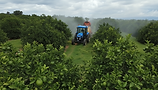
Most growers spray every 7 to 14 days, and efficacy often drops within a few days of application. That leaves an unprotected window inside every cycle, and psyllid activity does not avoid it.
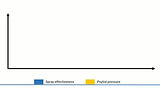

Psyllid activity is not tracked daily

Psyllid peaks are detected too late

Trap checks require time and labour
The result is a programme that reacts after activity has already increased. The principle behind fixing that is the same one Spotta applies in every sector, set out in why early detection is key to pest control.
Daily Monitoring Is the Solution
“Psyllids are present everywhere but activity is not uniform. If we know the high activity days, we can spray on the right day in the right area and ensure maximum protection for our trees.”
— Head of Production, industry grower
Psyllid populations fluctuate day to day. Knowing when activity climbs lets you spray on the right day, in the right block, with the trap method you already use.
That turns a fixed calendar into a targeted programme without asking anyone to walk the rows. It runs on the same smart pest monitoring platform Spotta deploys in date palm, forestry and hospitality.

Spray at the right moment

Focus treatments on affected areas
.png)
Spotta’s daily monitoring enables faster and more targeted pest management.
Reduce the spread of Greening infections

Benefits of Daily Monitoring
Daily monitoring of Psyllid activity helps growers manage Greening more effectively.
Growers have told Spotta that Daily Monitoring of Psyllids could have the following benefits:

Rapid, localised protection
Respond to a spike in the block where it is happening.

Reduced new infections
Earlier intervention slows spread across the orchard.

Verify treatment effectiveness
See how psyllid numbers respond after spraying, rather than assuming.
Free up monitoring labour
Time spent walking traps returns to other work.

More NFC juice production
Fewer infected trees means more of the fruit that carries premium value.

Secure data ownership
Monitoring data remains private.

Predictive management
A daily time series opens forecasting, and eventually spraying only when needed.

Sustainability benefits
Eventually target sprays only when necessary.
Economic Impact
Typical orchard conditions today:

5–10% new greening infections per year in typical reported conditions

Approximately $80+ lost per infected tree over 5 years
Approximately $80,000+ annual value at risk across a 100-hectare farm
These are conditions growers report rather than a guaranteed outcome. What monitoring is worth in your orchard depends on infection pressure, block layout and how much scope your spray programme has to be better targeted.
Targeting sprays more tightly also reduces total chemical use, which is the argument we set out in sustainable insect management.
For a 100 hectare citrus farm, this can represent $80k+ annual value at risk.
Growers believe that daily monitoring could have a meaningful impact on this loss. This is why Spotta invested in developing a monitoring system specifically for psyllids.


How the Spotta Psyllid Trap Works
Spotta automates the yellow sticky trap method you already trust rather than replacing it with something unfamiliar.

1. Daily counts: Accurate Asian citrus psyllid counts every day, with nobody in the row.
2. Automatic delivery: Counts reach your console over the trap’s own connection, not farm WiFi.
3. Three-month cartridges: No weekly servicing and no manual counting.
4. Threshold alerts: Automatic notification when psyllids per week cross your limit.

5. Consolidated reporting: Automatic reports, including one view across multiple farms.
This allows growers and agronomists to detect changes in psyllid activity quickly and respond more effectively.
Psyllid and Citrus Greening Questions
A bacterial disease, also called Huanglongbing, that blocks the tree’s vascular system. Fruit stays small and bitter, yield falls each year, and the tree eventually dies.
There is no cure for an infected tree. Treatment in practice means removing infected trees, keeping producing trees healthy longer, and controlling the psyllid — the only part that limits genuinely new infections.
Once it feeds on an infected tree it can transmit the disease to every healthy tree it feeds on afterwards. One insect is a moving source of infection for as long as it lives.
Usually the opposite. A fixed calendar sprays whether or not activity justifies it. Daily data concentrates applications on the blocks and days that matter.
It depends on block size, layout and historical pressure. We size this with you rather than applying a blanket figure per hectare.

Protect Your Citrus Orchards from Greening
Every citrus operation is different. Talk to a citrus specialist about what daily data would change in your blocks.
Growers running more than one crop often add red palm weevil monitoring for date palm, and more background sits under our agriculture pest articles.